09.10.26 By Bridgenext Think Tank

The embedded insurance market is projected to grow from $145B in 2025 to more than $1.2T by 2033, with over 76% of placements already driven through digital and API-first channels.
For insurers, this isn’t just a distribution shift; it’s a competitive advantage. Embedding coverage directly into digital customer journeys (checkout, booking, onboarding, renewal) is fast becoming the primary battleground for acquisition, engagement, and retention.
By the early 2030s, embedded channels are projected to account for nearly 15% of global insurance distribution. The question is no longer whether to invest, but whether your platform, partner model, and operating structure can scale.
As digital platforms increasingly own the customer relationship, insurers that can’t embed seamlessly risk becoming invisible at the point of purchase.
This blog breaks down what embedded insurance requires – and how insurers can assess their readiness for growth.
Embedded insurance is coverage that’s quoted, bound, and often paid for inside the purchase flow of another product or service, instead of through a separate insurance application. A customer booking a flight, upgrading a phone, or buying a car can add relevant protection in the same digital session, using data the platform already holds.
In practice, this shows up as:
| Embedded Insurance | Traditional Insurance | |
|---|---|---|
| Where it’s bought | Inside the partner’s checkout, app, or booking flow | Through an agent, broker, or a standalone insurer site/app |
| When it’s offered | At the moment of a related purchase, when intent is highest | Whenever the customer separately decides to shop for coverage |
| Underwriting data | Transaction and platform data already on hand | Collected fresh through a dedicated application or quote |
| Customer relationship | Shared between insurer and distribution partner | Owned by the insurer or broker |
| Primary growth lever | Attach rate on existing partner traffic | New lead generation and outbound sales |
Embedded insurance is growing because it integrates insurance directly into digital customer journeys. By offering protection the moment customer intent is highest, insurers can create frictionless experiences that improve conversion, engagement, and customer relevance. This model is gaining strong traction across e-commerce, retail, travel, and consumer electronics, with checkout-based electronics protection emerging as one of the largest embedded insurance use cases.
From an InsurTech perspective, scaling embedded insurance requires more than adding insurance to a digital transaction. Insurers need API-first and composable platforms that support real-time quoting, underwriting, policy issuance, claims, and payments. Legacy systems built for traditional distribution often struggle to support the speed, flexibility, and ecosystem connectivity embedded in insurance demands. A leading InsurTech platform, for example, built a Salesforce-native Insurance-as-a-Service model with real-time digital quoting and automated submission routing to accelerate quote-to-bind cycles, simplify partner onboarding, and scale distribution across the Salesforce ecosystem.
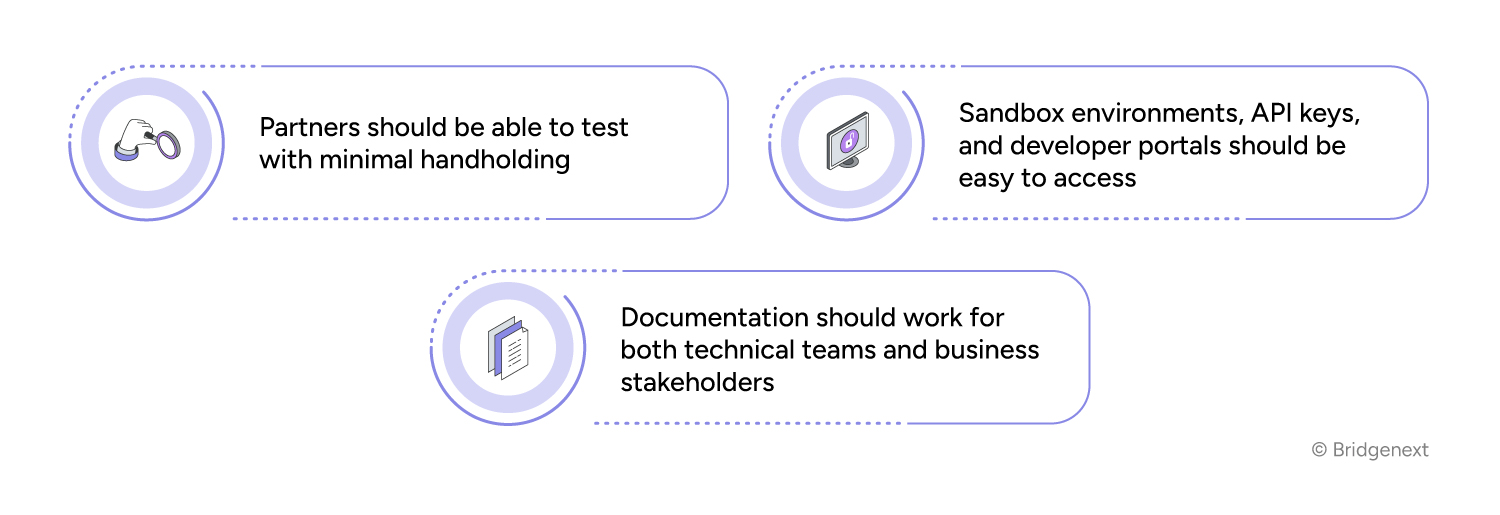
Partner experience is equally important. Developer-friendly APIs, self-service onboarding, sandbox access, and clear documentation are now critical to accelerating partner adoption and integration.
To scale successfully, insurers must also build governance into the model through compliance controls, claims workflows, data management, and performance tracking. One insurance brokerage improved visibility into sales performance and broker engagement through interactive BI and analytics dashboards, enabling faster decision-making and better partner alignment. Embedded insurance succeeds when it operates as a connected, ecosystem-driven business model rather than a standalone distribution channel.
Once the integration layer is in place, the next question is whether the model is ready to scale. In embedded insurance, that involves looking at more than just technology. It means testing whether the platform, the partner experience, the offer, the commercial model, and the operating setup all work together. A simple way to pressure-test that readiness is through five areas:
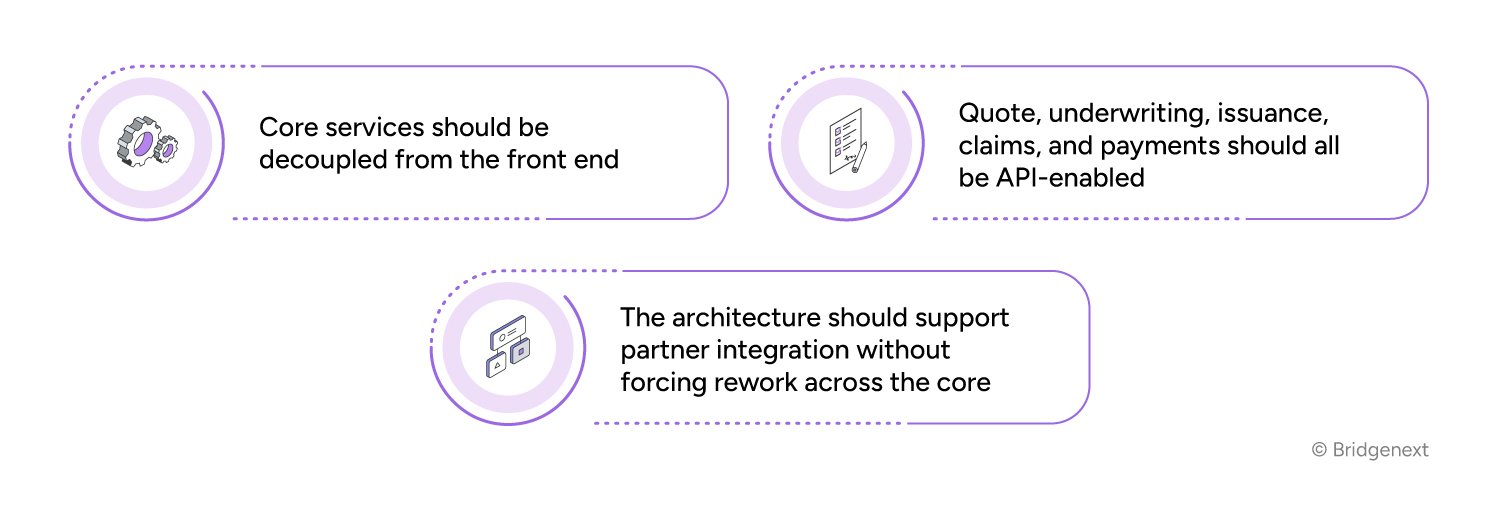
Platform Readiness
This is where the foundation must be solid. The core should be modular, API-ready, and capable of real-time processing.
Partner Readiness
Even the best insurance model will stall if partners cannot integrate efficiently.
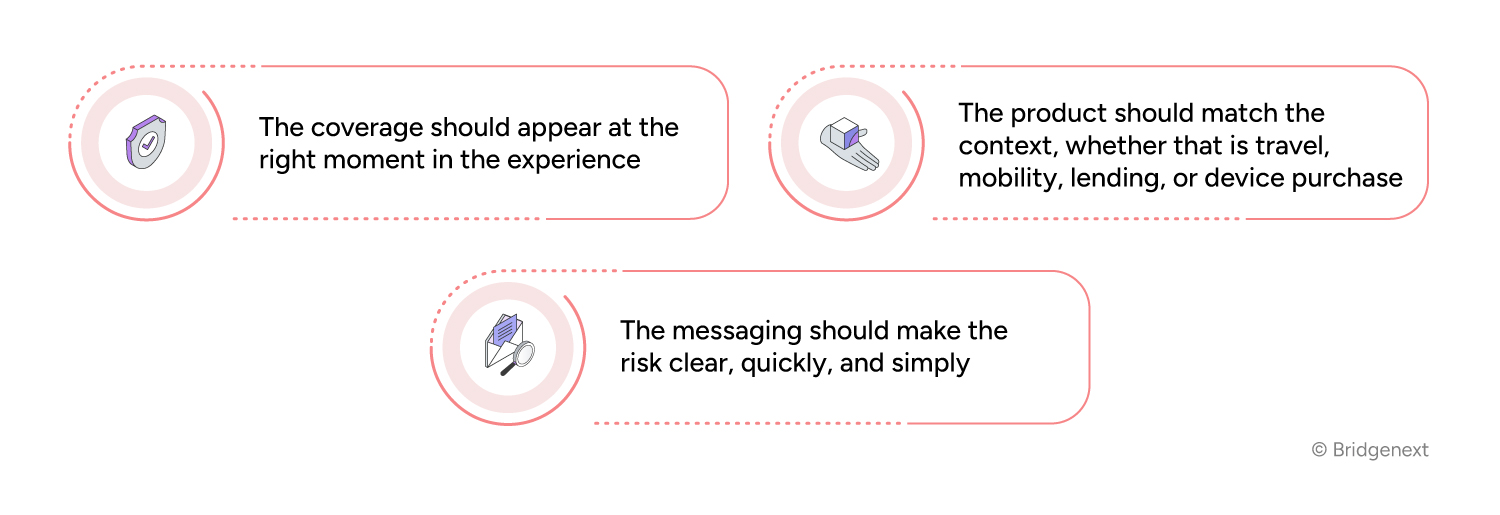
Offer Relevance
Embedded insurance works best when the offer feels like a natural extension of the customer journey.
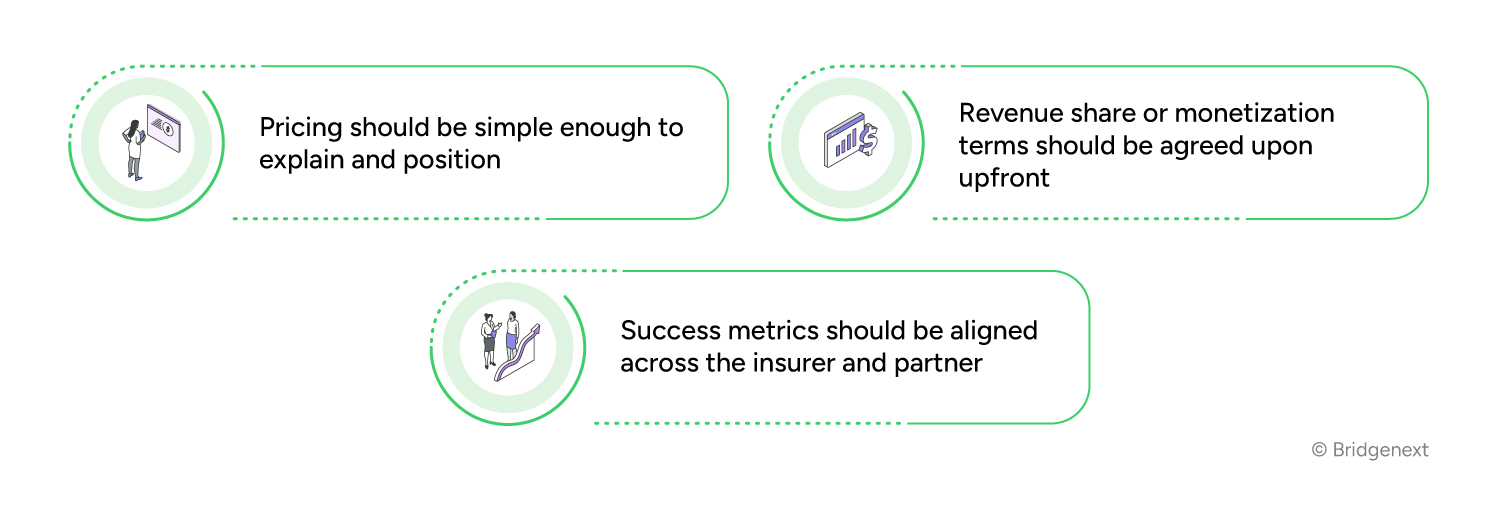
Commercial Readiness
A quality integration needs a commercial model that both sides can support.
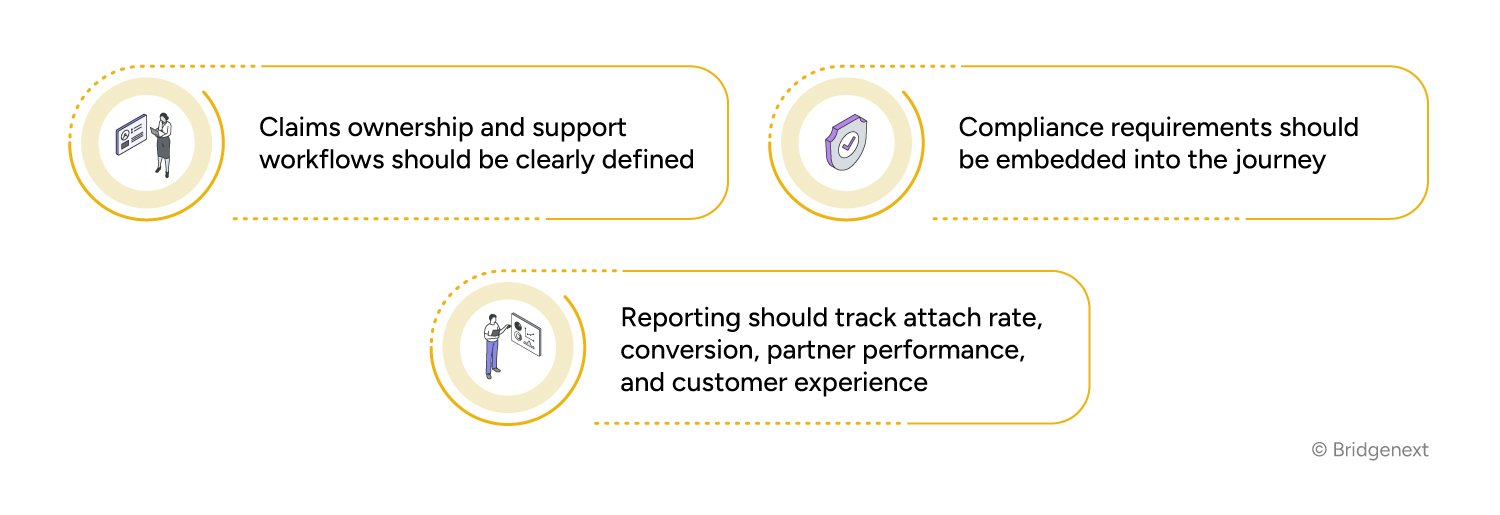
Operational Readiness
This is the part that often gets underestimated, but it is what keeps the model credible.
The value of this framework is that it moves the discussion away from “can we integrate?” to “can we scale responsibly?” And that is the difference between a pilot and a durable distribution model.
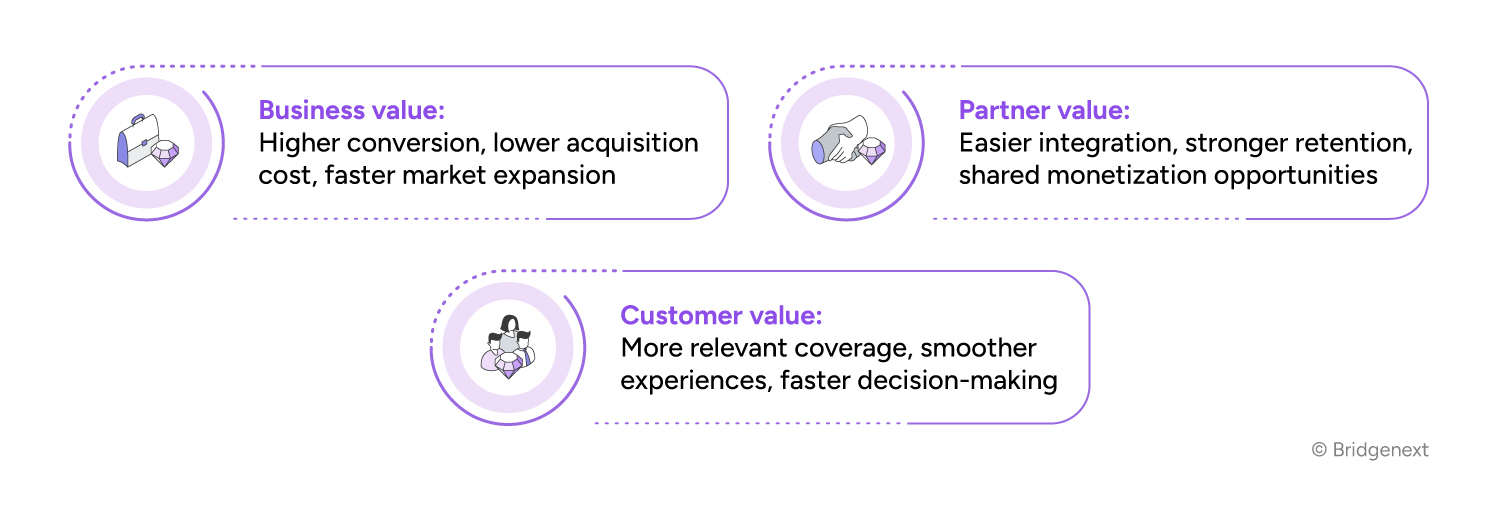
Embedded insurance platforms are increasingly being viewed as a growth and platform strategy, not just a distribution model because it places protection inside the journeys where demand already exists. When the offer appears at the right moment, attach rates improve, and conversion becomes more natural. Acquisition costs also drop by using existing channels vs having to build separate funnels from scratch.
The partner side is just as important. When insurers make integration easier through API-first architecture, faster onboarding, and clear commercial terms, partners are more willing to launch, stay engaged, and expand the relationship. That makes it easier to scale across multiple ecosystems.
For the customer, the value is simplicity. Embedded insurance works best when coverage feels relevant, timely, and easy to act on. It shows up at the point of need, which makes the experience feel more useful and builds trust over time.
At its core, embedded insurance grows when customer relevance, partner readiness, and scalable distribution move together.
Embedded insurance creates value across three layers:
Embedded insurance is increasingly becoming more than a channel strategy, evolving into a platform capability that shapes how insurers grow, partner, and engage customers in digital ecosystems.
Embedded insurance platforms scale when insurers combine API-first architecture, partner ecosystems, and operational readiness into one connected model. The competitive advantage is no longer just API access. It is the ability to help partners integrate quickly, launch contextual insurance experiences, and scale distribution across digital journeys.
What makes embedded insurance successful? Successful embedded insurance models combine:
Bridgenext helps insurers modernize and scale embedded insurance ecosystems effectively through insurance modernization, digital experience transformation, data and AI, Salesforce integration, and API-driven platform engineering services.
Assess your embedded insurance readiness and explore how Bridgenext helps insurers modernize distribution through API-first platforms, ecosystem integration, and scalable digital insurance experiences. Connect with our team.
References
www.grandviewresearch.com/industry-analysis/embedded-insurance-market-report
www.prnewswire.com/news-releases/embedded-insurance-market-outlook-30-cagr-forecast-through-2031-online-and-api-first-placements-held-76-38-share-in-2025–reports-mordor-intelligence-302712506.html
www.mckinsey.com/~/media/mckinsey/industries/financial%20services/our%20insights/global%20insurance%20report%202025/global-insurance-report-2025-the-pursuit-of-growth.pdf
www.mordorintelligence.com/industry-reports/embedded-insurance-market